International Iqbal Conference urges youth to put poet’s ideas into practice
- Speakers called for Allama Muhammad Iqbal’s teachings to guide efforts for human welfare, peace and sustainable development.
- Academics urged universities to strengthen Urdu literacy and help students engage with Iqbal’s original writings.
- Researchers presented papers in parallel sessions on the second day of the conference.
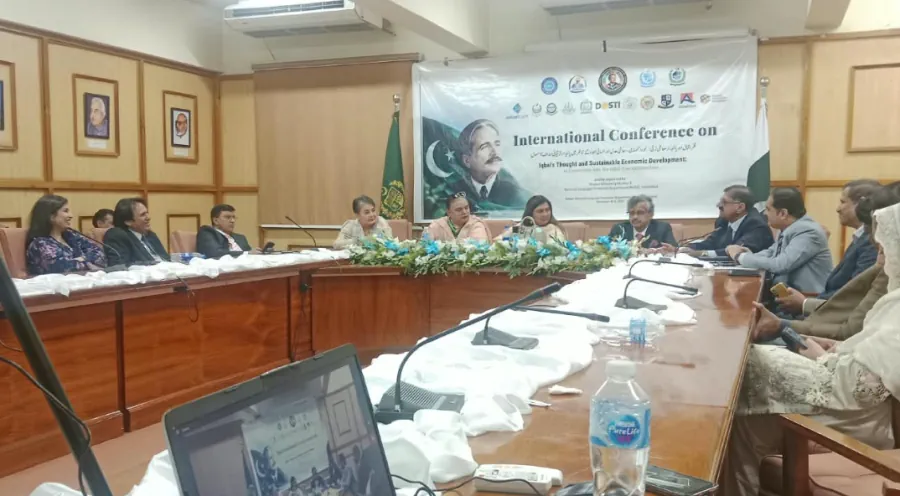
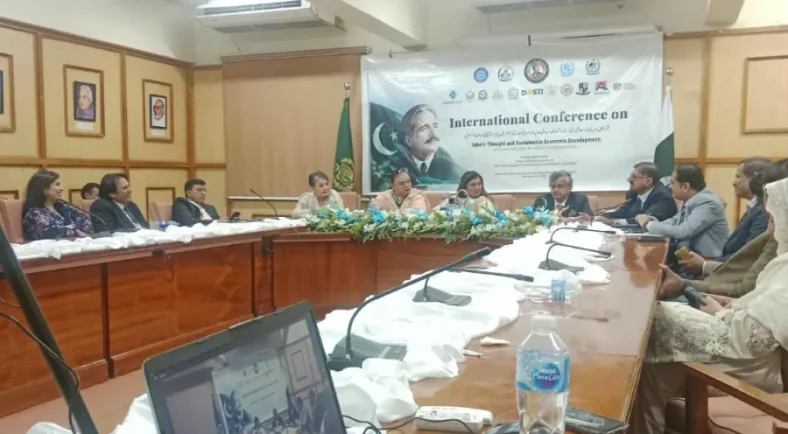
Speakers at the closing session of the two-day International Iqbal Conference urged educators to introduce younger generations to Allama Muhammad Iqbal’s philosophy and show how his ideas could be applied to contemporary challenges. Held under the theme “Iqbal’s Thought and Global Affairs,” the conference explored how the national poet’s teachings could inform efforts to advance human welfare, peace and sustainable development.
Professor Dr Muhammad Saleem Mazhar, director general of the National Language Promotion Department, said Iqbal and Quaid-e-Azam Muhammad Ali Jinnah had received the best education available in their time. Their lives, he said, showed the lasting value of knowledge and intellectual ability, even when material possessions were lost. He urged educators to give young people access to quality education and help them apply Iqbal’s teachings, which he said carried a message of peace and human welfare across borders and generations.
Also Read:
Professor Dr Nadeem Sheikh, vice chancellor of Mianwali University, linked national progress to preserving and promoting Urdu. He urged institutions to help students develop their reading and writing skills, warning that future generations could retain the ability to speak Urdu while losing the ability to read and write it. Professor Dr Muhammad Iqbal Shahid said a better understanding of Iqbal’s philosophy would help young readers appreciate his poetry.
Poet and columnist Muhammad Izhar-ul-Haq encouraged participants to study Iqbal’s poetry and prose in their original texts so they could interpret his ideas accurately, share them and put them into practice. Professor Dr Shazia Bashir of Government College University for Women, Sialkot, called for Iqbal’s teachings to inform everyday life throughout the year. She urged universities to give greater attention to ethics, Seerat studies and literature, and recited verses from Iqbal’s poetry.
Professor Dr Ashfaq Ahmad of the Urdu Department at FC College, Lahore, said the creation of Pakistan had fulfilled one of Iqbal’s dreams and that many of his other ideas still needed closer study and practical application. He urged society to carry that work beyond conferences and commemorative gatherings.
Turkmenistan’s ambassador to Pakistan, Atadjan Movlamov, who also serves as dean of the diplomatic corps in Islamabad, described the conference as a reflection of Pakistan’s cultural and intellectual heritage. He praised efforts to preserve those traditions and stressed the importance of understanding Iqbal’s philosophy.
Professor Dr Razia Sultana, vice chancellor of Women University Mardan, said Iqbal’s message continued to resonate across generations and around the world. She highlighted his work as a poet, philosopher, economist and lawyer, thanked the participants, speakers, distinguished guests, vice chancellors and diplomats, and expressed interest in organising similar academic events.
Earlier on the second day, researchers and academics presented papers on literary and intellectual topics in parallel sessions in Halls A and B. At the closing ceremony, organisers presented honorary shields to distinguished guests, keynote speakers, session chairs and nominated co-chairs. Paper presenters, session chairs and participants received certificates under the conference’s award policy.