Electricity Prices Could Triple in Pakistan During Winter as Loadshedding Fears Grow
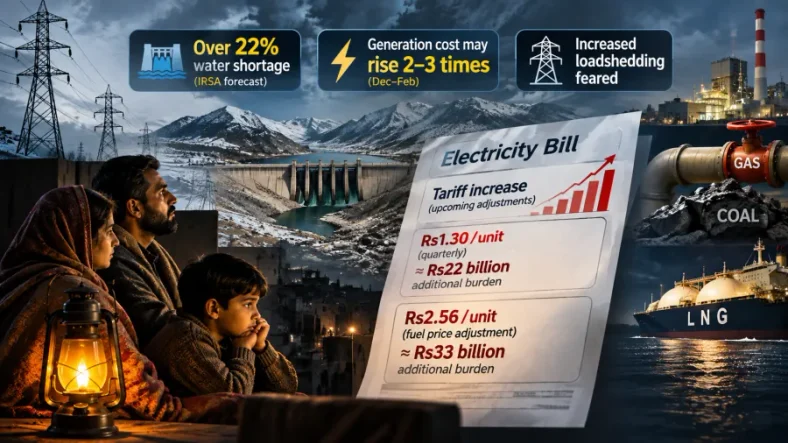
- Electricity generation costs in Pakistan could rise two to three times between December and February due to reduced hydropower production and expensive fuel.
- Power Division sources warn of increased loadshedding as IRSA forecasts a water shortage exceeding 22% during the winter season.
- Consumers may face additional tariff increases of Rs1.30 and Rs2.56 per unit through quarterly and fuel price adjustments, subject to approval.
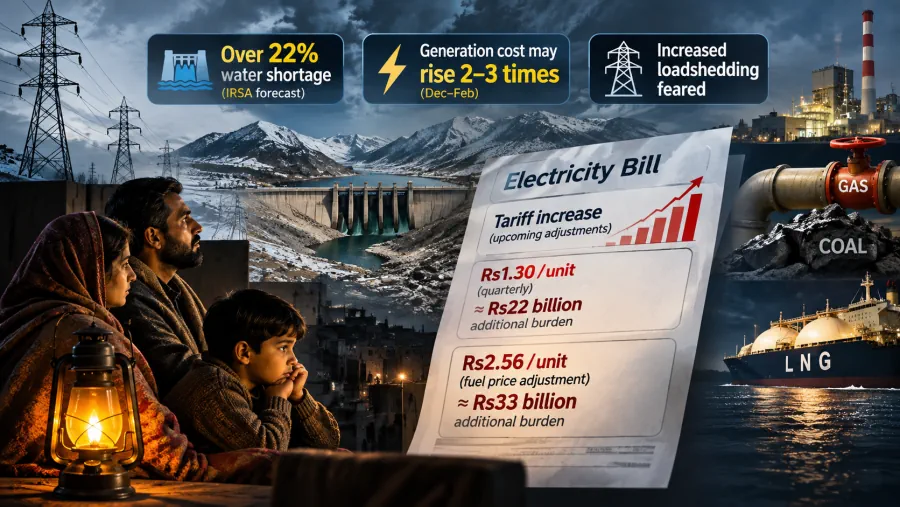
Electricity consumers across Pakistan could face significantly higher power bills and increased loadshedding during the upcoming winter season, as declining hydropower generation, limited gas availability and expensive imported fuels threaten to raise electricity production costs.
According to sources in the Power Division, the country may experience a substantial increase in electricity generation expenses between December and February, with costs potentially rising two to three times because of changing fuel requirements and price adjustments.
Also Read:
The anticipated increase comes amid concerns over reduced water availability, which could severely affect hydropower production during the coldest months of the year.
The Indus River System Authority (IRSA) has forecast a water shortage of more than 22% during the winter season, raising concerns about the availability of water for electricity generation.
Power Division sources indicated that hydropower output could fall to extremely low levels during December, January and February as reduced river flows limit electricity production at hydropower facilities.
Hydropower is an important source of relatively low-cost electricity in Pakistan. A sharp decline in its contribution would force the country to depend more heavily on thermal power plants operating on natural gas, liquefied natural gas (LNG), coal and other fuels.
This shift in the electricity generation mix could substantially increase production expenses, particularly if international fuel prices remain elevated.
Sources warned that rising global prices of LNG, coal and other energy commodities could further complicate the situation, increasing the cost of operating power plants during the winter months.
The availability of locally produced natural gas is also expected to remain a challenge, as demand for gas typically increases during colder weather.
Limited domestic gas supplies for electricity generation could require greater reliance on imported fuels, placing additional financial pressure on the power sector.
According to Power Division sources, these factors could cause electricity generation costs to increase by two to three times during the December-to-February period.
However, the projected increase relates to generation costs and fuel adjustments and does not necessarily mean that the final electricity tariff paid by every consumer will triple.
Alongside concerns about rising electricity costs, the possibility of increased loadshedding has also emerged.
Sources indicated that the government may need to implement additional electricity load management during the winter months if generation becomes more expensive or fuel availability creates supply difficulties.
The anticipated decline in hydropower output, combined with limited domestic gas supplies, could make it more challenging for electricity authorities to maintain a stable power supply.
Consumers in different parts of the country may consequently experience longer or more frequent power outages between December and February, depending on electricity availability and load management decisions.
Meanwhile, electricity consumers are already facing the possibility of additional financial pressure through upcoming tariff adjustments.
According to estimates, electricity prices could increase by approximately Rs1.30 per unit under the next quarterly tariff adjustment.
If implemented, the proposed adjustment could place an additional financial burden of around Rs22 billion on electricity consumers nationwide.
The quarterly adjustment is separate from the potential increase in winter electricity generation costs and would add to the overall expenses faced by households and businesses.
In another development, a hearing has been conducted on a request submitted by the Central Power Purchasing Agency (CPPA) seeking an increase of Rs2.56 per unit under the fuel price adjustment for September.
The proposed adjustment reflects changes in electricity generation expenses during the relevant period.
If approved by the concerned regulatory authority, the Rs2.56 per unit increase could result in an additional financial burden of approximately Rs33 billion on electricity consumers.
The proposed fuel price adjustment and quarterly tariff increase represent separate financial measures, with their implementation dependent on the relevant regulatory decisions.
Households and commercial consumers could face additional pressure if these adjustments are approved while electricity generation costs also increase during the winter season.
Power Division sources have warned that the combination of reduced hydropower production, expensive fuel imports, limited gas supplies and possible additional load management could make the coming winter particularly challenging for electricity consumers across Pakistan.