Egypt pledges support for Saudi Arabia as parliament considers military authorisation
- President Abdel Fattah al-Sisi seeks parliamentary approval for military assistance if Saudi Arabia requests it.
- Lawmakers defer discussions until Monday as Houthi attacks on the kingdom intensify.
- Potential Egyptian involvement could widen the regional conflict and increase risks to energy supplies and shipping.
Egypt has pledged to help Saudi Arabia defend its security and stability as its parliament considers authorising military assistance, a move that could deepen Cairo’s involvement in the widening Middle East conflict.
President Abdel Fattah al-Sisi requested an urgent parliamentary session to approve military support for the kingdom should Riyadh ask for it. A vote had been expected on Sunday, but two lawmakers and local media reports said discussions would continue on Monday.
Also Read:
The Egyptian presidency announced its position after a meeting of the National Defence Council chaired by Sisi and attended by the parliamentary speaker, prime minister and army chief. It said Cairo was prepared to provide all necessary and possible assistance to safeguard Saudi security, territorial integrity, resources and Islamic holy sites.
The announcement comes as Yemen’s Iran-aligned Houthis step up attacks on Saudi Arabia, including strikes targeting Riyadh’s international airport and state oil company Saudi Aramco.
Fighting between the Houthis and the Saudi-led coalition supporting Yemen’s internationally recognised government has intensified in recent weeks. The Houthis control the capital, Sanaa, and much of northern Yemen, with renewed hostilities following the collapse of a truce.
The conflict has become another front in the US-Israeli war against Iran. Egyptian military involvement could widen that confrontation, which has threatened global energy supplies and driven oil prices sharply higher since the United States and Israel attacked Iran in late February.
Houthi advances have also raised concerns over the Bab el-Mandeb strait, a strategic route for oil shipments and international maritime trade.
Hours after reports that parliamentary discussions would continue, Egyptian Foreign Minister Badr Abdelatty said on X that he had spoken by telephone with Saudi Foreign Minister Prince Faisal bin Farhan. Their conversation covered regional developments and the need to de-escalate tensions.
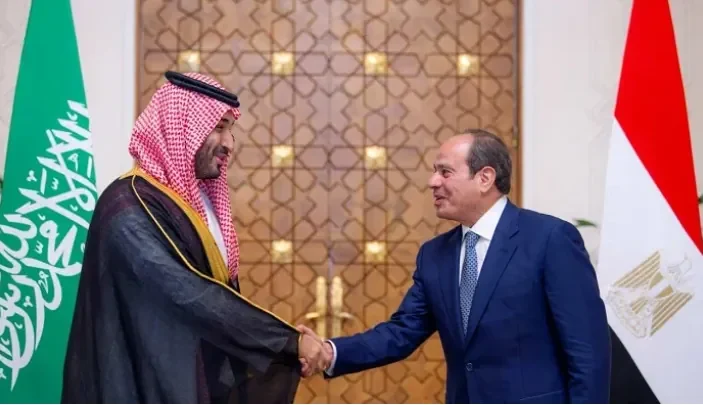
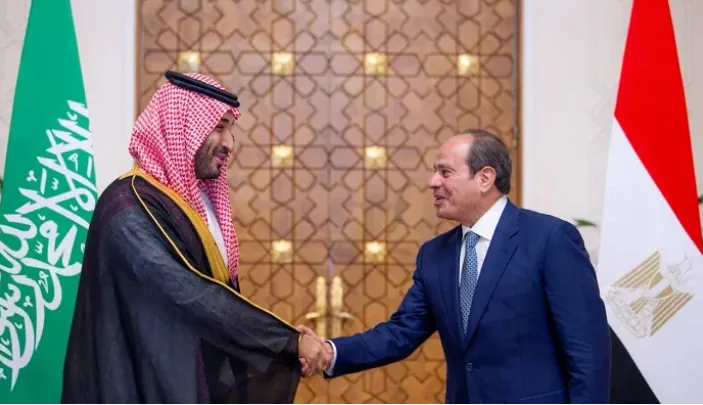
In a speech on Saturday, Sisi said Egypt would act in line with guidance from Saudi King Salman and Crown Prince Mohammed bin Salman. The crown prince visited Sisi on September 15, after fighting in Yemen resumed.
Any Egyptian intervention could expose the country to retaliation from the Houthis, whose force of tens of thousands of fighters has developed missile and drone capabilities capable of threatening targets across the region.
Arab countries, particularly Gulf states hosting American military bases, have faced repeated attacks by Iran and allied groups during the conflict. These include the Houthis and Iran-aligned militias operating in Iraq.
Egypt’s Mediterranean port of Damietta was targeted in a drone attack in July. No group claimed responsibility, and Cairo did not publicly identify a perpetrator. Egyptian authorities said they were taking the measures needed to protect national security.
Egypt and Saudi Arabia maintain close strategic and economic ties. Following the military removal of President Mohamed Morsi in 2013, Saudi Arabia, the United Arab Emirates and other wealthy Gulf states provided Egypt with billions of dollars in assistance, central-bank deposits and investments. Sisi assumed the presidency the following year.
Cairo also joined the Saudi-led coalition that intervened in Yemen in 2015 to support the government against the Houthis, although its combat involvement remained limited.
Riyadh has sought backing from regional partners and Pakistan after approaching US President Donald Trump for help against the Houthis. Sources told Reuters last month that Trump had declined to authorise American strikes, with Washington offering intelligence-sharing and targeting assistance instead.
Saudi Defence Minister Prince Khalid bin Salman travelled to Abu Dhabi on Sunday for talks with UAE President Sheikh Mohammed bin Zayed Al Nahyan. According to the Emirati state news agency, the meeting focused on regional security.
The talks followed last month’s visit to Riyadh by UAE Vice President Sheikh Mansour bin Zayed Al Nahyan. It was the first visit by a senior Emirati official since a deep rift emerged between the two Gulf powers last year.