Government, Opposition Agree to Resume Political Dialogue as PM Shehbaz Set to Join Talks
- Government and opposition representatives have agreed to continue talks on political and constitutional matters.
- Prime Minister Shehbaz Sharif is expected to lead the government side in the next round of consultations at Parliament House.
- The Senate witnessed a heated debate over Imran Khan’s health, medical treatment and meetings with his family.
- Government ministers said the offer for dialogue remained open and urged the opposition to return to the negotiating table.
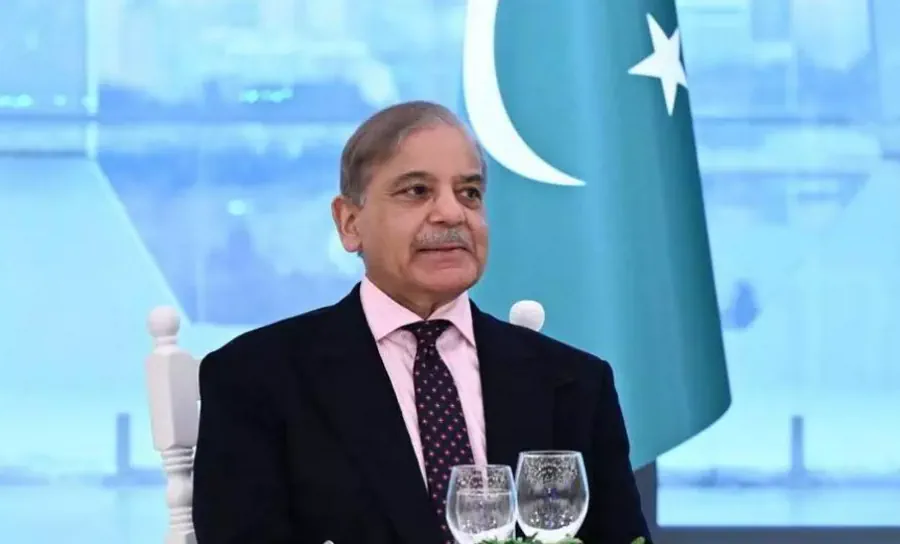
The government and opposition have agreed to resume political dialogue, with Prime Minister Shehbaz Sharif expected to personally participate in upcoming consultations as both sides seek to discuss political and constitutional issues.
The development came after a government delegation met opposition leader Mahmood Khan Achakzai in his chamber at Parliament House on Monday. The delegation included Adviser to the Prime Minister on Political Affairs Rana Sanaullah, Law Minister Azam Nazeer Tarar and Minister for Parliamentary Affairs Tariq Fazal Chaudhry.
Also Read:
According to sources, the meeting focused on the prevailing political situation as well as a letter written by Achakzai to Prime Minister Shehbaz Sharif. Both sides agreed that further rounds of dialogue should be held.
Achakzai reportedly proposed that the prime minister should personally participate in discussions involving major political and constitutional matters and that consultations should take place under his leadership in the Constitution Room at Parliament House.
It was subsequently agreed that a government delegation led by Prime Minister Shehbaz Sharif would meet opposition representatives at Parliament House. Following those consultations, the prime minister would invite an opposition delegation to the Prime Minister’s House for more detailed discussions on outstanding issues.
Speaking to reporters after the meeting, Rana Sanaullah said the discussion did not involve complaints or grievances. He said the prime minister was responding to Achakzai’s letter and that the correspondence formed the main subject of the meeting.
The renewed push for political dialogue came as the Senate witnessed a heated debate over the health and prison conditions of PTI founder and former prime minister Imran Khan.
Opposition Leader in the Senate Allama Raja Nasir Abbas called for Imran to be allowed treatment by doctors of his choice and meetings with his family on humanitarian grounds. Government ministers maintained that the former prime minister was receiving medical care in accordance with applicable prison rules while reiterating that the government remained willing to engage the opposition politically.
Before the Senate proceeded with its scheduled agenda, Raja Nasir Abbas requested that regular business be deferred to allow a debate on Imran Khan’s health. Following consultations with treasury members, the Senate chairman postponed the agenda and permitted five lawmakers from each side to speak.
Raja Nasir Abbas said Imran was a former prime minister and questioned his continued imprisonment. Referring to a report submitted by the Adiala Jail superintendent to the Supreme Court, he claimed the PTI founder was distressed and suffering from high blood pressure.
He argued that political issues could move towards a solution if both sides sat together for dialogue. Addressing Rana Sanaullah, he recalled that the PML-N leader had himself experienced imprisonment and criminal cases, and questioned the government’s current approach towards another politician.
Raja Nasir Abbas also renewed his proposal for the formation of a parliamentary committee that could facilitate meetings between Imran Khan, Mahmood Khan Achakzai and other parliamentarians.
Referring to the execution of former prime minister Zulfikar Ali Bhutto, he alleged that politicians had historically faced injustice through the involvement of state institutions and argued that such practices should not continue.
Responding to the opposition’s concerns, Rana Sanaullah said Imran Khan was a convicted prisoner in judicial custody and that decisions concerning meetings with people in judicial custody were made by the courts.
Sanaullah said he was unaware of the claim regarding Imran’s high blood pressure and that, according to the information available to him, the former prime minister was not unwell. He added that Imran had developed an eye-related problem and had received what he described as the best available treatment at PIMS Hospital, including injections.
He said several petitions relating to meetings with Imran were already pending before the courts. Sanaullah also maintained that interactions with PTI representatives were continuing, referring to contacts involving Senator Saleem Mandviwalla and Barrister Gohar.
Law Minister Azam Nazeer Tarar defended the legal proceedings against Imran Khan, saying cases relating to May 9 and other matters had proceeded under the law, arguments had been heard and sentences had been handed down. Those convicted, he added, had exercised their legal right to file appeals.
Tarar acknowledged delays within Pakistan’s judicial system, noting that appeals in death penalty cases had previously taken years to be heard, while some NAB appeals had also remained pending for six years or longer.
He recalled that PML-N leaders had faced the same judicial system and said former prime minister Nawaz Sharif had also been convicted before subsequently receiving bail through the courts rather than being released through street pressure.
On Imran Khan’s health, Tarar said a petition on the matter had been heard in open court and PTI lawyer Khawaja Salman Safdar had been appointed as a judicial assistant. He said the resulting report included details of Imran’s concerns, including his complaint that he was not receiving treatment from doctors of his choice.
The law minister argued that prison rules must apply equally to everyone, saying allowing one prisoner to choose personal doctors would raise the same demand for other inmates.
PTI lawmakers responded that Imran Khan was a former prime minister and should not be treated as an ordinary prisoner. Tarar countered that all citizens were equal before the law and that a former prime minister could not be granted a separate legal standard.
The exchange triggered protests from PTI senators, with Tarar accusing opposition members of interrupting proceedings for political and social media purposes. He also referred to petitions filed at an international forum in Geneva, saying the government had provided information concerning Imran’s health in accordance with the law.
PTI Senator Mohsin Aziz questioned why Imran Khan was not being allowed to receive treatment from a doctor of his choice or meet his family. He claimed the PTI founder’s “real crime” was his well-known “absolutely not” statement and argued that the previous PTI government had not treated Nawaz Sharif in the same manner.
Aziz also questioned restrictions on Imran’s family meetings and asked why his wife was facing difficulties despite, according to him, having no connection with political activity.
Responding to the opposition, Tariq Fazal Chaudhry reiterated that Prime Minister Shehbaz Sharif’s invitation for talks remained open. He urged Mahmood Khan Achakzai, Raja Nasir Abbas and other opposition figures to engage the government through negotiations.
At the same time, he criticised the opposition for calling for negotiations while also announcing protests, arguing that cities could not be shut down in the name of peaceful demonstrations.
PTI Senator Mashal Yousafzai said Imran Khan, as a former prime minister who established three cancer hospitals, should be able to receive appropriate medical care. Referring to the Adiala Jail superintendent’s report, she also claimed Imran was suffering from high blood pressure and demanded access to doctors of his choice.
Minister of State for Interior Talal Chaudhry said the government’s political opponents had initially taken the position that they did not recognise the prime minister, Parliament or other political parties, but were now raising the matter on humanitarian grounds.
He said a three-member Supreme Court bench had heard a petition concerning Imran earlier in the day and claimed the PTI founder had been granted extensive meetings during his imprisonment. He added that the Adiala Jail superintendent had submitted a report concerning those meetings.
Talal Chaudhry also questioned claims that Imran’s sons were being prevented from visiting him, saying both possessed valid NICOPs and asking why they had not come to meet their father during the past three years.
He urged PTI to adopt a political approach and return to negotiations, maintaining that it was the opposition that had previously left the negotiating table.
“The negotiating table is still there. The Speaker’s office is there. Come for talks and sit together to find a solution to the problems,” he said.
PTI senators later began protesting inside the House. During the commotion, Senator Mirza Mohammad Afridi pointed out a lack of quorum, after which the Senate session was adjourned until 3:30pm.