Powerful 7.7-Magnitude Earthquake Strikes Indonesia, At Least 20 Killed
- At least 20 people have been confirmed dead after a powerful earthquake struck near Indonesia’s Flores island.
- Six people were injured, while two others remained trapped beneath rubble as rescue operations continued.
- A tsunami warning was lifted, but authorities urged residents to stay away from damaged buildings.
- Dozens of aftershocks have followed the main quake, including one measuring magnitude 6.1.
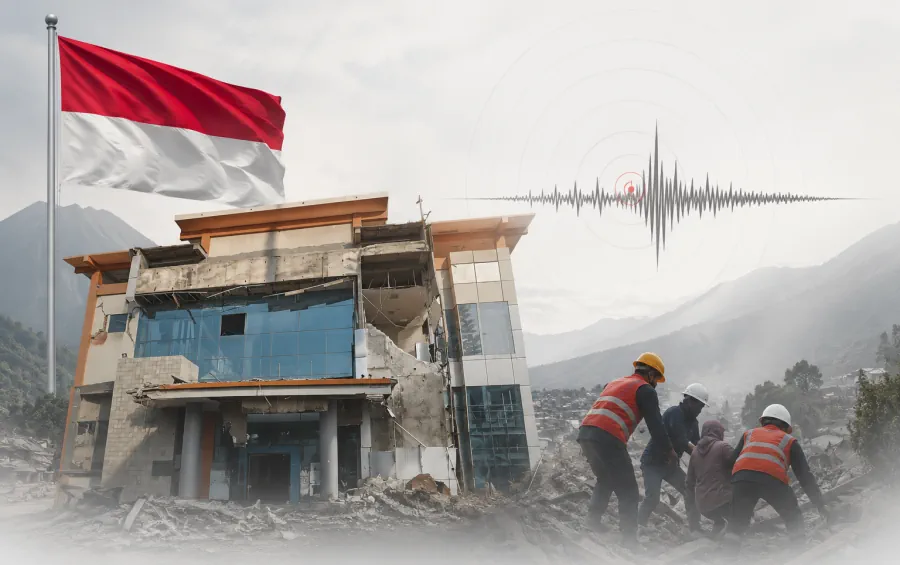
At least 20 people were killed after a powerful 7.7-magnitude earthquake struck off Flores island in eastern Indonesia on Saturday, triggering widespread panic, damaging buildings and forcing thousands of residents to evacuate to safer areas.
TIM SAR GABUNGAN EVAKUASI KORBAN TERDAMPAK GEMPA NAGEKEO NTT
— Radio Elshinta (@RadioElshinta) August 15, 2026
Maumere, 15/08/2026. Tim SAR Gabungan mengevakuasi Tiga Orang yang terdampak gempa 7.7 di kedalaman 30 Km di Timur Laut Mbay-Nagekeo Pada Pukul 05.58 WITA Tanggal 15 Agustus 2026.
"Kami menerima informasi bahwa saat… pic.twitter.com/Tpj2UM5Lfj
Rescue teams were searching through collapsed structures and debris as authorities worked to determine the full scale of the destruction. Fathur Rahman, a rescue official, said deaths had been reported from four towns on Flores, an island also popular with tourists.
Also Read:
According to Rahman, at least 20 people had been confirmed dead, six were injured and two others remained buried under debris. He was travelling by boat to Nagekeo regency, which was reported to be among the areas hardest hit by the earthquake.
Two people were also believed to be trapped alive beneath rubble in neighbouring Manggarai regency. Rescue teams were prioritising efforts to reach people caught under collapsed structures, although landslides had blocked several roads and complicated access to affected communities.
Residents of Nagekeo, located close to the earthquake’s epicentre, rushed towards higher ground after noticing the sea retreat earlier in the day, raising fears of a possible tsunami. Indonesia’s Meteorology, Climatology, and Geophysics Agency (BMKG) initially issued a tsunami warning and urged communities in vulnerable coastal areas to evacuate.
The tsunami alert was later withdrawn, but officials advised residents not to return to damaged buildings because continuing aftershocks could cause already weakened structures to collapse.
Dozens of aftershocks were recorded following the initial earthquake, with the strongest reaching a magnitude of 6.1.
Nagekeo resident Yohanes Babo, 56, said he was at a market when the powerful shaking began during the early morning. He said people panicked and rushed in different directions before heading towards the hills. Babo said his family was safe and no one in his household had been injured.
US and Indonesian authorities placed the epicentre of the shallow earthquake just off the northern coast of Flores, approximately 68 kilometres northwest of the coastal town of Ende.
Rescue operations were also carried out at the port of Maumere, where a building partially collapsed. Rahman said rescuers managed to pull two people alive from the debris, while another person was found dead.
The overall extent of damage remained unclear as emergency teams continued assessments across the affected region.
In Maumere, around 2,500 kilometres east of Jakarta, resident Lukas Lotar described the earthquake as sudden and powerful. Lotar, who works in customer service at a hospital, said patients fled the facility during the shaking and cracks appeared in some walls.
Most communities in the affected region consist of towns and villages with relatively few high-rise buildings.
During the tsunami alert, large numbers of residents were seen leaving coastal communities on foot, motorcycles and in cars, while some families travelled in the backs of pickup trucks as they sought higher ground.
BMKG earthquake and tsunami director Wijayanto said authorities had ended the tsunami warning but would continue monitoring sea levels for any unusual changes.
Indonesia is highly vulnerable to earthquakes and volcanic activity because it lies along the Pacific “Ring of Fire”, a major zone of seismic activity extending through Japan, Southeast Asia and across the Pacific basin.
Flores has previously experienced a devastating earthquake of the same magnitude. In 1992, a 7.7-magnitude earthquake struck the island and generated a tsunami, killing around 2,500 people.
Indonesia was also among the countries worst affected by the catastrophic 9.1-magnitude earthquake off Sumatra in December 2004. The resulting tsunami killed around 220,000 people across the region, including approximately 170,000 in Indonesia, making it one of the deadliest natural disasters in recorded history.
In 2018, another series of powerful earthquakes struck Lombok and surrounding areas, killing more than 550 people on Lombok and neighbouring Sumbawa. Later that year, a magnitude 7.5 earthquake and subsequent tsunami devastated Palu on Sulawesi island, leaving more than 4,300 people dead or missing.