President Zardari Warns of Regional Terror Threats as Pakistan Seeks Global Engagement on Gaza Peace and Security
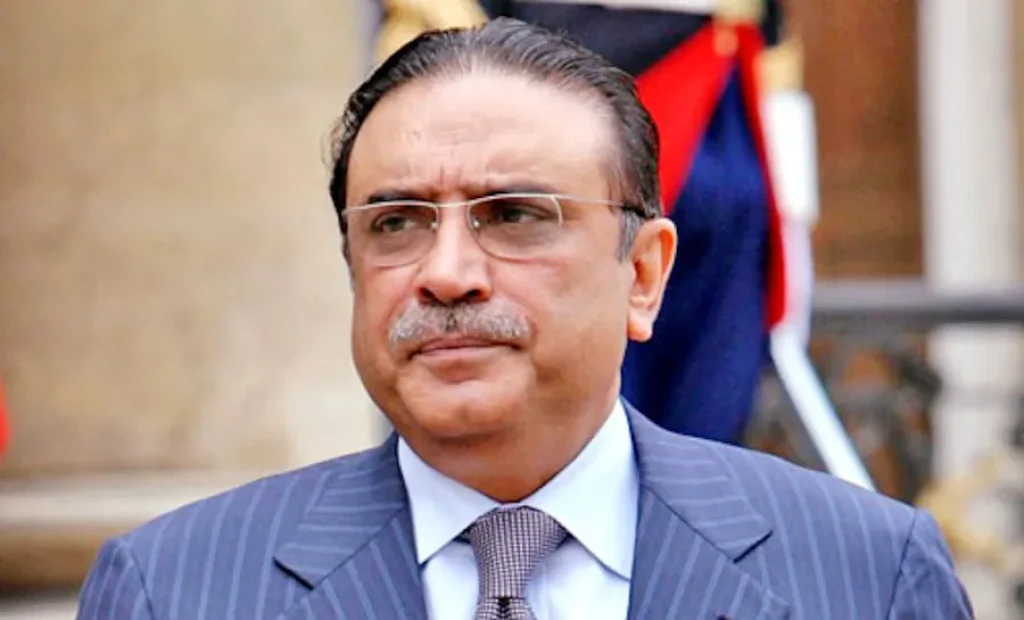
President Asif Ali Zardari has warned that some neighbouring countries are actively aiding terrorist groups operating against Pakistan, even as Islamabad steps up its engagement at the international level through participation in global peace initiatives such as the US-led Gaza Board of Peace. His remarks came amid heightened security concerns following a deadly terrorist attack in Islamabad and growing diplomatic activity involving Pakistan’s leadership on regional and global peace issues.
President Zardari made the comments while thanking world leaders, governments and international organisations for expressing solidarity with Pakistan after a suicide bombing at the Imambargah and Mosque Khadijat-ul-Kubra in Islamabad’s Tarlai area during Friday prayers on February 6. The attack left at least 33 people martyred and dozens injured, prompting widespread international condemnation. According to a statement issued by the President Secretariat’s media wing, the president said Pakistan deeply appreciated the support shown by the global community at a moment of national grief.
Also Read:
- President Zardari Warns of Regional Terror Threats as Pakistan Seeks Global Engagement on Gaza Peace and Security
- Pakistan to Attend First Gaza Board of Peace Meeting in Washington, PM Shehbaz Sharif Likely to Participate
- Pakistan PM Shehbaz Sharif to Take Final Decision on India-Pakistan T20 World Cup Match Issue
He reiterated that terrorism cannot be confronted by any single country acting alone, stressing that it remains a shared global responsibility. President Zardari said Pakistan’s experience has consistently shown that when terrorist organisations are allowed space, facilitation or impunity beyond national borders, the consequences are ultimately borne by innocent civilians across the world.
The president stated that certain neighbouring countries have become complicit in terrorist activities by allowing militant groups to operate against Pakistan from their territories, while others have gone further by providing direct financial, technical and even military support. He said such actions have severely undermined regional security and contributed to repeated cycles of violence.
President Zardari also strongly criticised the Afghan Taliban regime, accusing it of allowing terrorist groups to use Afghan soil to launch attacks against Pakistani security forces and civilians. He warned that the current situation in Afghanistan has become even more dangerous than the period before the September 11 attacks, when terrorist networks posed serious threats to global peace and stability. He further alleged that Pakistan’s eastern neighbour was assisting the Taliban regime, creating risks not only for Pakistan but for the entire region and the wider international community.
Following the Islamabad attack, Interior Minister Mohsin Naqvi confirmed that authorities had arrested the mastermind behind the suicide bombing, along with the attacker’s facilitators. The suspects were linked to the outlawed Daesh group, according to official statements, as security agencies continued investigations into cross-border terror networks.
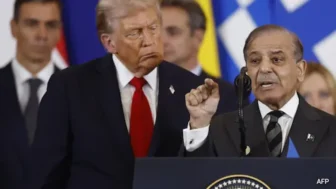
In parallel with these security developments, Pakistan is also expanding its diplomatic engagement on international peace and conflict resolution. Islamabad has confirmed its decision to attend the first meeting of the Gaza Board of Peace, scheduled to be held in Washington on February 19 under the chairmanship of United States President Donald Trump. Prime Minister Shehbaz Sharif is expected to attend the meeting, though a final decision on Pakistan’s representation will be announced after internal consultations.
The meeting will review the situation in Gaza, including the fragile ceasefire, humanitarian assistance, reconstruction efforts and prospects for sustainable peace. Pakistan has received a formal invitation to join the initiative, and diplomatic sources have described the event as significant, noting that it will also serve as a fundraising conference for Gaza’s reconstruction.
Pakistan’s Foreign Office had earlier confirmed that the country would remain engaged with international efforts aimed at peace and security in Gaza, leading to a lasting solution to the Palestine issue in accordance with United Nations resolutions. Islamabad has repeatedly stated at international forums that it is ready to play a constructive diplomatic role, while ruling out any military involvement. In December 2025, Deputy Prime Minister and Foreign Minister Ishaq Dar said Pakistan’s civil and military leadership was fully aligned on not sending troops to Gaza.
The Gaza Board of Peace, launched by President Trump in late January, has drawn mixed reactions globally. While some countries have joined, others have remained cautious, and human rights experts have raised concerns about the board’s structure and mandate. The meeting is being convened amid a ceasefire in Gaza that began in October but has been repeatedly violated, with reports of more than 550 Palestinians and four Israeli soldiers killed since then.
President Zardari, meanwhile, thanked the international community once again for standing with Pakistan after the Islamabad attack. He said the messages of sympathy and solidarity had brought comfort to the Pakistani people and strength to grieving families, reaffirming that the fight against terrorism and violent extremism is a common struggle that demands collective global action.
Read all the Breaking News Live on pakistantimes.com and Get Latest English News & Updates from Pakistan Times. Follow us on Whatsapp channel for more.